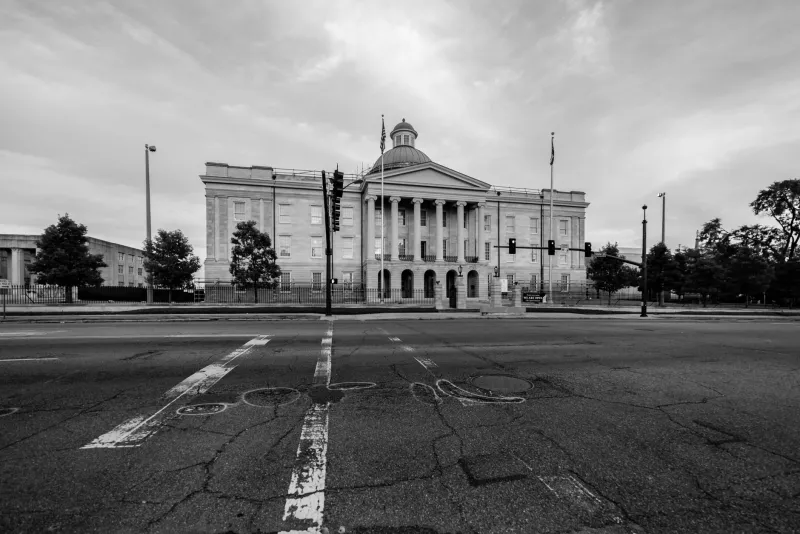
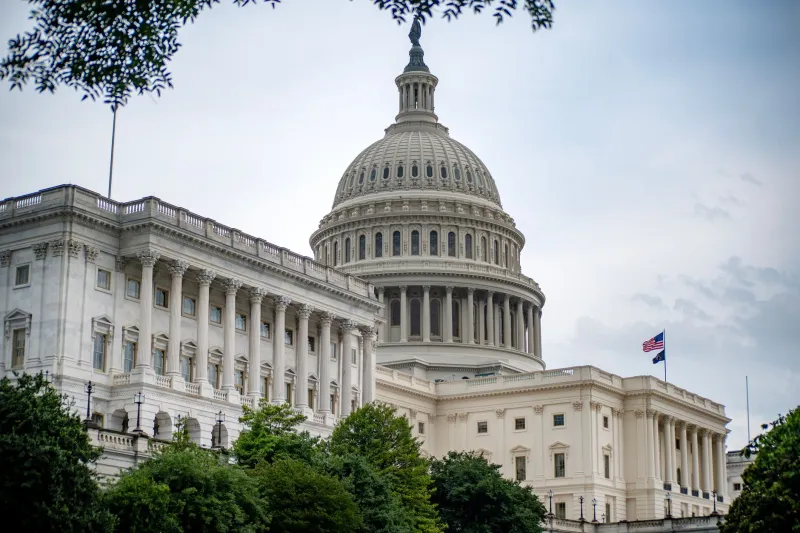
Pillars of Dust: The Quiet Demolition of America's Foundational Institutions
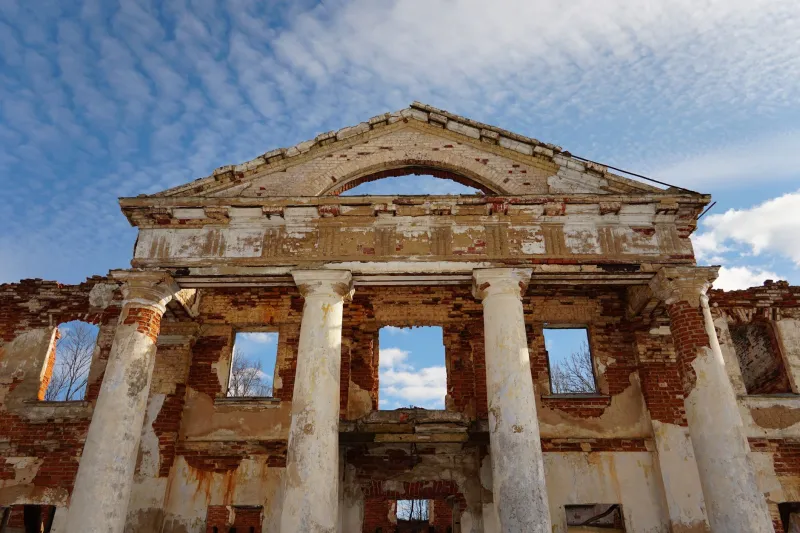
There is a particular kind of tragedy reserved for civilizations that destroy themselves from within—not through the sword of an enemy, but through the slow, deliberate corrosion of everything that once made them worthy of preservation. America is living that tragedy in real time. The institutions that generations of citizens entrusted with their liberty, their children's minds, their safety, and their governance have not merely stumbled. They have been systematically hollowed out, repurposed, and weaponized against the very people they were designed to serve.
This is not hyperbole. This is the ledger of a nation approaching a moment of reckoning it can no longer defer.
The University: From Marketplace of Ideas to Ideological Monoculture
The American university was once the crucible in which free inquiry, vigorous debate, and intellectual humility were forged into the next generation of citizens and leaders. It is now, in far too many of its incarnations, something closer to a credentialing factory for a singular political orthodoxy.
Gallup polling has tracked a precipitous decline in public confidence in higher education over the past decade, with the sharpest drops occurring among conservatives and independents who once viewed the university as a neutral arbiter of knowledge. They were not wrong to withdraw that confidence. When tenured faculty face professional destruction for questioning prevailing narratives, when syllabi are engineered to deliver ideological conclusions rather than cultivate critical reasoning, and when administrators spend more energy managing "safe spaces" than defending free expression, the institution has ceased to perform its essential function.
The fiscal consequences alone are staggering. Tuition costs have risen at multiples of inflation for forty consecutive years, funded in large part by federally backed student loans that now constitute a $1.7 trillion national liability. Americans are being taxed to subsidize an apparatus that openly holds them in contempt. That is not education. That is an extraction racket dressed in academic regalia.
The Press: The Fourth Estate Becomes the Fifth Column
The Founders enshrined freedom of the press not as a professional privilege but as a civic necessity—a check on power, a guardian of the public's right to know. What they could not have anticipated was an institution so thoroughly captured by ideological partisanship that it would voluntarily abandon its watchdog function in service of preferred political outcomes.
The evidence is no longer a matter of conservative grievance; it is a matter of documented record. The suppression of the Hunter Biden laptop story in the weeks before a presidential election, the years-long promotion of a Russia collusion narrative that crumbled under scrutiny, the selective application of journalistic standards depending on which party stands to benefit—these are not editorial oversights. They are institutional choices with institutional consequences.
Pew Research data confirms what millions of Americans have concluded through lived experience: trust in national media has collapsed to historic lows. When citizens cannot rely on a shared factual foundation, democratic deliberation becomes impossible. Propaganda fills the vacuum that journalism abandons. And a republic that cannot agree on basic reality cannot long sustain itself.
Law Enforcement and the Justice System: Justice Unblinded
Few sights are more destabilizing to a constitutional order than the perception—or the reality—that justice is administered unequally depending on one's political affiliation, wealth, or proximity to power. America is confronting precisely that destabilization today.
The selective prosecution of political opponents, the two-tiered application of federal statutes that appears to shield the well-connected while crushing the ordinary citizen, and the transformation of federal law enforcement agencies into instruments of partisan intelligence gathering have not gone unnoticed by the American public. Confidence in the FBI, the Department of Justice, and the broader judicial apparatus has eroded with a velocity that should alarm anyone serious about the long-term health of the republic.
This is not merely a political talking point. When a significant portion of the citizenry believes—with substantial evidentiary basis—that the scales of justice are weighted by politics rather than principle, civil order rests on a foundation of sand. The consequences of that erosion are fiscal as well as social: litigation costs, enforcement inefficiencies, and the economic drag of a legal environment perceived as arbitrary and corrupt impose enormous costs on businesses and individuals alike.
The Civil Service: The Permanent Government and Its Unaccountable Power
Perhaps the most insidious dimension of institutional collapse is the one least visible to the average American: the entrenchment of an unelected, permanent administrative class that has come to regard itself as the true sovereign of the nation's governance. The civil service, originally conceived as a merit-based bulwark against political patronage, has metastasized into something the Founders would have recognized as precisely the kind of consolidated, unaccountable power they designed the Constitution to prevent.
Federal agencies now routinely promulgate regulations with the force of law, unvettered by meaningful congressional oversight. Career bureaucrats openly resist and undermine the directives of elected executives. The administrative state spends trillions of dollars annually with accountability mechanisms so attenuated as to be functionally ornamental. This is government by an entrenched class for an entrenched class—and the American taxpayer is the one receiving the bill.
The fiscal implications of this unaccountable bureaucratic sprawl are inseparable from the broader institutional crisis. Agencies captured by ideological imperatives rather than mission effectiveness allocate resources according to political priorities rather than public need. The result is an ever-expanding government that delivers ever-diminishing returns while consuming an ever-larger share of national wealth.
The Cascading Consequence: When Pillars Fall Together
What makes the present moment uniquely dangerous is not any single institutional failure but the simultaneity of them all. When the university produces graduates who cannot think critically, the press that should hold power accountable cannot perform that function honestly, the justice system that should enforce equal protection under the law operates on a sliding scale of political convenience, and the civil service that should execute the people's will pursues its own—the cascade becomes self-reinforcing.
Each failing institution weakens the others. A press that will not report honestly on bureaucratic malfeasance enables a civil service that operates without accountability. A university system that graduates ideological conformists rather than independent thinkers supplies the press and the civil service with personnel constitutionally incapable of self-correction. A justice system that will not enforce equal standards emboldens every other institution to abandon its own.
This is what civilizational unraveling looks like before it becomes undeniable. It is not a sudden catastrophe but a gathering one—a slow accumulation of failures that, at some threshold, becomes irreversible.
Reformation or Reckoning
The American republic has survived profound crises before. It has done so because, at critical moments, enough citizens recognized the gravity of what was at stake and demanded—and achieved—fundamental reformation rather than cosmetic adjustment. That capacity for renewal is not yet exhausted. But it is not inexhaustible either.
The path forward is not comfortable. It requires the defunding and restructuring of institutions that have proven themselves unworthy of continued public trust. It requires the courage to name ideological capture for what it is, regardless of the social and professional costs of doing so. It requires a citizenry willing to hold its institutions to the standards those institutions themselves once proclaimed.
Judgment, in the end, is not something that arrives from without. It is the natural consequence of choices made within. America's institutions have made their choices. The question now is whether the American people will make theirs—before the hour of reformation passes and only the hour of reckoning remains.