The Bill Comes Due: America's Debt Spiral and the Fiscal Judgment Day Washington Refuses to Face
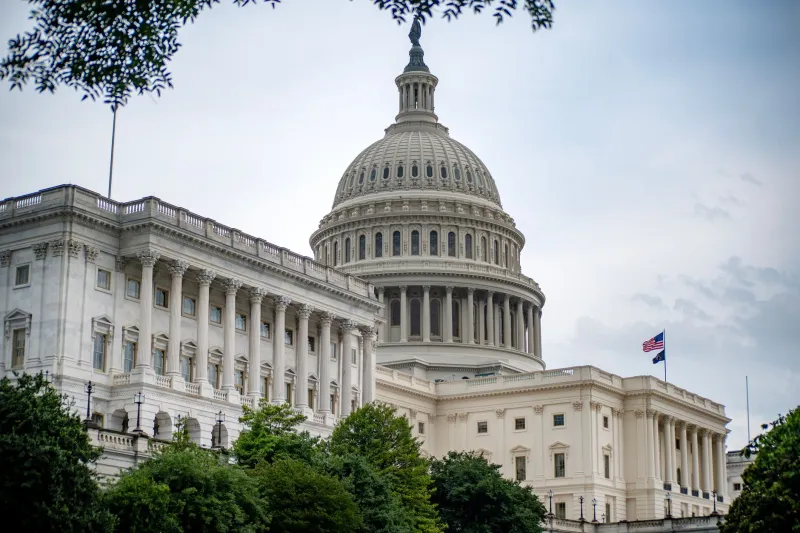
There is a particular brand of cowardice that masquerades as governance in the halls of the United States Capitol. It wears expensive suits, delivers impassioned floor speeches, and periodically stages elaborate theatrical confrontations over the debt ceiling — only to arrive, reliably and predictably, at the same conclusion: spend more, borrow more, and let the next generation sort out the wreckage. This is not leadership. It is a slow-motion betrayal of the American people, and the day of reckoning for this generational deception is drawing nearer with every billion dollars added to a national debt that has now surpassed $34 trillion.
Make no mistake — this is not a partisan accounting error. This is a bipartisan catastrophe decades in the making, and the judgment that follows will not discriminate between the red states and the blue ones.
A Debt Built by Both Parties, Owned by Neither
Conservatives rightly point to the reckless expansion of entitlement spending, the bloated administrative state, and the progressive appetite for social programs that consume revenue faster than any economy can generate it. These critiques are valid and well-documented. But intellectual honesty demands acknowledgment of a harder truth: Republican administrations and Republican-controlled Congresses have added trillions to the national debt with equal enthusiasm, cloaking their own profligacy in the language of national security, tax relief, and economic stimulus.
The George W. Bush era delivered two unfunded wars and a prescription drug expansion that strained the Treasury. The Trump administration — for all its rhetorical firepower against Washington waste — oversaw deficit spending that accelerated well before the pandemic arrived to provide convenient cover. Meanwhile, the Biden administration has treated the federal checkbook as an instrument of ideological transformation, signing spending packages of a scale that would have been politically unthinkable a generation ago.
Both parties, when given the keys to the kingdom, have chosen the same path: spend now, reckon later. The debt ceiling, that nominally serious legislative mechanism designed to impose fiscal discipline, has been raised or suspended more than 100 times since its creation. It has become not a guardrail but a speed bump — slowing the vehicle of government excess for precisely long enough to generate dramatic headlines before the accelerator is pressed once more.
The Theater of Crisis, the Reality of Collapse
Each debt ceiling negotiation is staged with the precision of a Broadway production. The Treasury Department issues solemn warnings about the X-date — that moment when the government can no longer meet its obligations. Markets grow anxious. Cable news fills its airtime with breathless commentary about potential default and economic catastrophe. Politicians from both sides of the aisle position themselves as the last line of defense against fiscal apocalypse, even as they are the very authors of the conditions that created it.
And then, invariably, a deal is struck. The ceiling is raised. The crisis is declared averted. Washington exhales, congratulates itself on its statesmanship, and returns immediately to the business of spending money it does not have.
This cycle is not governance. It is performance. And the audience — the American taxpayer — is being played for a fool.
What is never seriously debated in these theatrical confrontations is the underlying structural reality: the United States government spends approximately $2 trillion more each year than it collects in revenue. Interest payments alone on the existing debt now exceed $1 trillion annually, surpassing the entire defense budget. These are not abstract numbers. They represent a compounding obligation that is consuming an ever-larger share of every federal dollar before a single road is paved, a single veteran is treated, or a single Social Security check is issued.
The Cascading Consequences for Ordinary Americans
When fiscal theorists discuss sovereign debt crises, they tend to speak in the sterile language of basis points, yield curves, and credit ratings. But the consequences of America's debt trajectory will not be experienced in the abstract. They will be felt in kitchen tables across this country with brutal, practical clarity.
Consider what a genuine loss of confidence in U.S. Treasury bonds would mean. Interest rates would rise sharply, making mortgages, car loans, and small business financing dramatically more expensive. The dollar's purchasing power — already eroded by the inflationary consequences of pandemic-era money printing — would face sustained downward pressure. Pension funds heavily invested in government securities would face structural shortfalls. State and municipal governments, whose borrowing costs are tied to federal rates, would be forced into painful choices between services and solvency.
The Americans least equipped to absorb these shocks — those on fixed incomes, those without investment portfolios to hedge against inflation, those whose livelihoods depend on small businesses sensitive to credit conditions — would suffer most acutely. The political class that engineered this catastrophe would, as is their custom, find ways to insulate themselves from its worst effects.
The Prophetic Warning Washington Refuses to Heed
There is a moral dimension to this fiscal crisis that Washington's secular political culture is structurally incapable of confronting. A nation that consistently chooses present comfort over future responsibility, that burdens its children with obligations they did not incur, that treats the productive capacity of future generations as a credit line to be drawn upon at will — such a nation is not merely making poor economic decisions. It is making a profound moral choice, and choices of that magnitude carry consequences that compound just as surely as interest does.
The conservative tradition has always understood that genuine freedom requires fiscal discipline. That a government which cannot restrain its own appetites cannot long preserve the liberty of its citizens. That debt is not merely a financial instrument but a form of bondage — a transfer of obligation from those who benefited to those who had no voice in the transaction.
Those warnings have been issued, ignored, reissued, and ignored again. The prophets of fiscal responsibility have been dismissed as alarmists, their projections perpetually revised upward as the debt grows faster than the most pessimistic models predicted.
The Reckoning That Cannot Be Negotiated Away
Unlike a debt ceiling vote, the judgment of economic reality cannot be extended by legislative maneuver. Markets do not grant continuing resolutions. Compound interest does not respond to floor speeches. At some point — and the trajectory of current spending suggests that point is measurable in years rather than decades — the accumulated consequences of Washington's fiscal irresponsibility will assert themselves with a force that no amount of political theater can contain.
The question before the American people is not whether this reckoning is coming. It is. The question is whether citizens will demand, before that moment arrives, that their representatives demonstrate the courage that governance actually requires: the willingness to make hard choices, to prioritize obligations over ambitions, and to treat the public treasury as a sacred trust rather than a political instrument.
Washington has heard this warning before and chosen comfortable inaction. The bill for that choice is now overdue. And when it is finally presented in full — with interest — there will be no ceiling left to raise.