Blind Prophets and Fallen Empires: The Elite Consensus That Will Bury America
History does not whisper its warnings — it thunders them. The Roman Senate debated procedural trivialities while Alaric's Visigoths massed at the gates. The Bourbon court of Louis XVI mistook bread riots for a passing inconvenience. The Romanovs interpreted revolutionary fervor as a manageable labor dispute. In every case, the catastrophe did not arrive without announcement. It arrived despite announcement — because those holding power had long since lost the capacity, or the will, to hear.
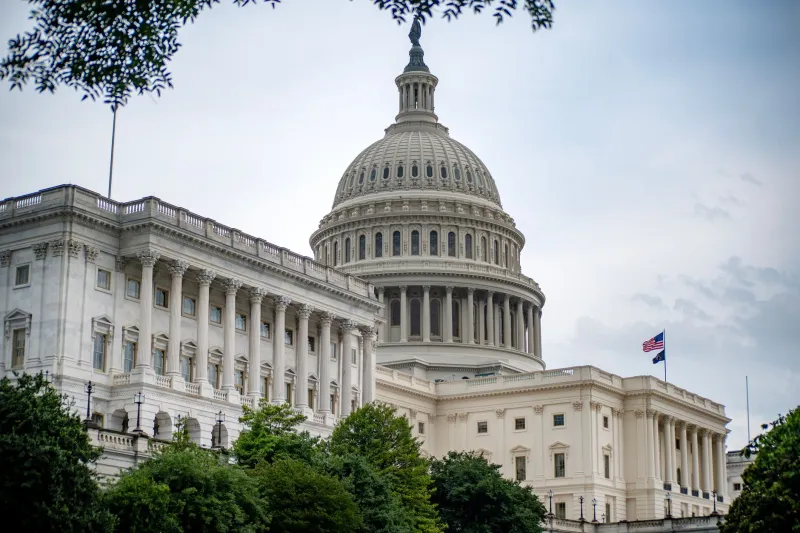
America in 2025 stands at precisely such an inflection point. The writing is on the wall. It has been there for years. And the class of men and women entrusted to govern this republic — in its legislative chambers, its executive agencies, its academic institutions, and its media organs — have made a collective, willful choice to look away.
This is not mere incompetence. Incompetence can be corrected. What we are witnessing is something far more dangerous: the institutionalization of denial.
The Architecture of Willful Blindness
To understand how an entire leadership class can ignore systemic collapse in plain sight, one must first understand the incentive structure that surrounds them. Washington's political class is not rewarded for sounding alarms. It is rewarded for managing perceptions, maintaining donor relationships, and preserving the comfortable mythology that America's foundational institutions are fundamentally sound and require only modest, incremental adjustment.
To acknowledge the true scope of the crisis — a national debt exceeding $34 trillion and accelerating, a southern border that functions as an open corridor, a military recruitment shortfall that leaves critical operational gaps, a public education apparatus that has traded literacy for ideology — is to implicitly condemn decades of bipartisan failure. And that is a condemnation few in the professional political class are willing to render against themselves.
So instead, they triangulate. They commission studies. They convene blue-ribbon panels. They issue statements of grave concern followed by no consequential action. They have perfected the performance of governance while abandoning its substance.
The Border: A Wound Left to Fester
Consider the southern border — not as a political abstraction, but as a concrete, measurable failure of sovereign duty. For years, the evidence has been overwhelming. Millions of individuals have entered this country illegally, with unknown numbers among them carrying criminal records, gang affiliations, or worse. Fentanyl, manufactured in Chinese laboratories and trafficked through Mexican cartels, now kills more than 70,000 Americans annually — a death toll that dwarfs every foreign war of the last half century.
And yet, the political and media establishment spent the better part of a decade insisting that those who raised this alarm were motivated by xenophobia rather than legitimate national security concerns. The problem was not merely ignored — those who named it were actively maligned. This is the particular cruelty of elite denial: it does not merely fail to solve the problem; it punishes those who refuse to pretend the problem does not exist.
Empires that lose the capacity to defend their borders do not remain empires. This is not a partisan observation. It is a historical constant.
Military Readiness and the Hollowing of American Power
The United States military remains the most formidable fighting force in the history of human civilization. But formidability is not a permanent condition — it is a function of sustained investment, rigorous standards, and coherent strategic doctrine. On each of these measures, warning lights are flashing.
Recruiting shortfalls have persisted across multiple service branches, with the Army falling tens of thousands of enlistees short of annual targets. Readiness rates for critical aircraft and naval vessels remain troublingly below operational benchmarks. Meanwhile, adversaries — China in particular — have engaged in the most rapid military expansion since the Second World War, explicitly targeting the domains where American dominance has historically been most pronounced: naval power projection, hypersonic weapons technology, and space-based assets.
A governing class genuinely focused on national survival would treat this as a five-alarm emergency. Instead, significant portions of the defense establishment have redirected institutional energy toward social engineering initiatives that, whatever their ideological merits, have no bearing on combat effectiveness. The soldiers of the Roman legions in their final centuries were a different force from those who had conquered the known world. The degradation was gradual. It was also fatal.
Cultural Fragmentation and the Dissolution of Shared Purpose
No civilization survives the permanent fracturing of its common identity. This is not a sentimental observation — it is a structural one. Cohesion is the precondition for collective sacrifice, and collective sacrifice is the precondition for national survival in moments of genuine crisis.
America's cultural fabric has been subjected to decades of deliberate strain. Institutions that once served as unifying forces — civic organizations, religious communities, local governance — have atrophied. In their place, a relentless politics of grievance has sorted Americans into competing tribal factions, each convinced that the other represents not merely a political opponent but an existential threat. This is not an accident of history. It is the predictable consequence of an elite culture that has found division more professionally useful than unity.
When Alexis de Tocqueville surveyed the young American republic in the 1830s, he marveled at the vitality of its civil society — the thousand voluntary associations through which Americans built community, resolved disputes, and maintained the habits of self-governance. That infrastructure is not gone, but it is gravely weakened. And the political class that should be nurturing its restoration is, in too many cases, actively accelerating its dissolution.
The Prophetic Tradition and the Courage to Name the Crisis
The great prophetic voices of history were not pessimists. They were realists who loved what they saw dying and refused to participate in the comfortable lie that everything was fine. From Isaiah to Churchill to Solzhenitsyn, those who sounded the alarm against civilizational decay did so not from despair but from an uncompromising commitment to truth — and from a conviction that nations, like individuals, retain the capacity for repentance and renewal until the very moment they do not.
America has not yet passed that moment. The resources of this republic — its constitutional architecture, its entrepreneurial spirit, its deep reservoirs of civic faith — remain formidable. But resources squandered through denial and mismanagement do not replenish themselves automatically. They require leadership willing to speak plainly about what is broken, and a citizenry willing to demand that plainness from those who seek their votes.
The elites who govern this nation have chosen the path of the Bourbon court: learning nothing, forgetting nothing, and insisting that the tremors beneath their feet are merely the ordinary vibrations of a healthy society in motion.
Judgment, as this publication has consistently warned, does not negotiate with those who refuse to acknowledge it. It simply arrives.
The question before the American people is not whether the reckoning is coming. The evidence of its approach surrounds us. The question is whether enough citizens will strip away the comfortable delusion before the ledger is finally, and irreversibly, closed.