The Hollow Republic: When Citizens Stop Believing, Nations Begin to Die
The Quiet Withdrawal That Precedes Every Great Collapse
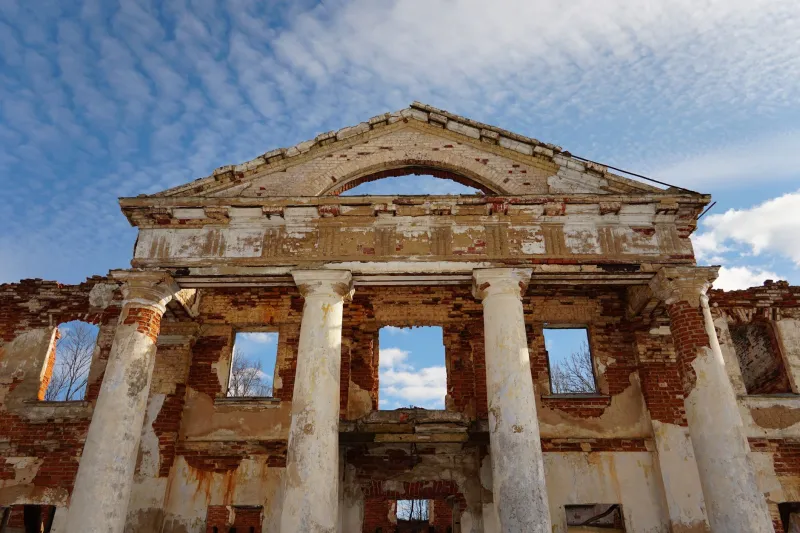
There is a particular kind of silence that descends upon a civilization before its institutions give way entirely. It is not the silence of peace or satisfaction. It is the silence of a people who have stopped arguing with the system — because they no longer believe the system is listening, or that it ever truly was. That silence is now audible across the United States of America, and those with ears trained by history ought to be deeply alarmed.
Consider what it means, in practical terms, when a nation's citizens collectively withdraw their consent from the structures meant to govern them. It does not manifest first as revolution or open defiance. It manifests as disengagement — in plummeting voter confidence, in the quiet exodus from mainstream media, in the refusal to comply with regulatory mandates regarded as illegitimate, in the spread of parallel institutions built specifically to circumvent those deemed corrupt beyond redemption. America is living through precisely this sequence, and the political class, insulated by wealth and credential, appears constitutionally incapable of comprehending its severity.
A Crisis of Legitimacy, Not Merely of Policy
It would be a catastrophic misreading to frame what is happening as a disagreement over tax rates or border policy or the appropriate scope of federal authority. Those are policy disputes, and democracies are designed to absorb them. What is occurring now cuts far deeper. It is a crisis of legitimacy — a widespread, cross-ideological conviction that the institutions themselves are rigged, captured, or simply indifferent to the populations they purport to serve.
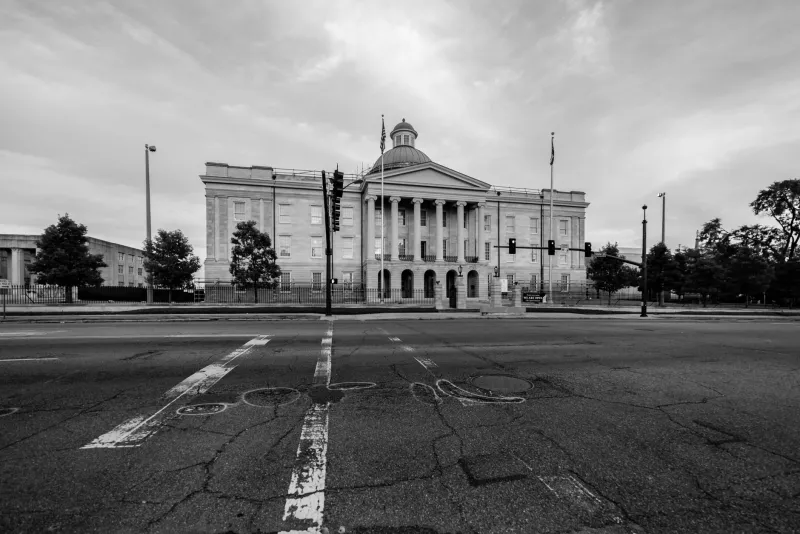
The numbers are unambiguous. Trust in Congress has languished in the single digits for years. Confidence in the mainstream media has collapsed to historic lows, with a majority of Americans now describing major news organizations as deliberately deceptive. The Supreme Court, once regarded as above the fray of partisan warfare, finds its authority publicly questioned by sitting senators and executive branch officials alike. Even the Federal Reserve — that citadel of technocratic presumption — faces a skepticism that would have been unthinkable a generation ago, its monetary pronouncements greeted not with deference but with derision.
This is not the ordinary friction of a contentious democracy. This is the systematic dissolution of the social compact that makes self-governance possible in the first place.
What History Teaches About the Void That Follows
The historical record on this question is neither ambiguous nor comforting. When Rome's republican institutions lost the genuine allegiance of the citizenry, what filled the vacuum was not a reformed republic — it was Caesar. When the Weimar Republic's institutions were rendered laughable by hyperinflation, judicial manipulation, and street-level violence, what emerged from the wreckage was not a more enlightened democracy. When the ancien régime of France exhausted the patience and loyalty of its people, the void was filled not by measured reform but by the guillotine.
The pattern is consistent across civilizations and centuries: institutional legitimacy, once genuinely forfeited, is almost never restored through incremental correction. The systems that replaced discredited ones were rarely better, and often catastrophically worse. This is the lesson that America's current leadership class — fixated on the next electoral cycle, the next quarterly earnings report, the next favorable headline — appears entirely uninterested in absorbing.
The conservative tradition has always understood that ordered liberty depends upon institutions worthy of the trust placed in them. Edmund Burke did not counsel blind deference to authority; he counseled reverence for institutions that had earned their authority through demonstrated service to the common good. The operative question for America in this hour is whether any of its major institutions can honestly make that claim.
The Fiscal Dimension of Institutional Collapse
The erosion of institutional trust carries with it a dimension that is directly fiscal in consequence, and it demands acknowledgment in any honest accounting of the republic's condition. When citizens cease to regard governmental authority as legitimate, their willingness to fund that authority through taxation diminishes correspondingly. The underground economy expands. Compliance costs surge as enforcement must substitute for voluntary adherence. Capital, ever sensitive to political instability, begins to migrate toward more predictable jurisdictions.
More fundamentally, the social trust that undergirds productive economic cooperation — the confidence that contracts will be honored, that regulations will be applied evenhandedly, that the currency will retain its value — corrodes in direct proportion to the perceived illegitimacy of the institutions responsible for those guarantees. A government that cannot command the genuine respect of its citizens cannot long command their economic participation either. The fiscal consequences of a legitimacy crisis are not theoretical; they are the compound interest on decades of institutional betrayal, and the bill is coming due.
The Conservative Imperative: Restoration, Not Mere Resistance
For those who hold to a conservative vision of American life, the appropriate response to this moment is not triumphalism at the left's embarrassments, nor is it the reflexive defense of every existing institution simply because it exists. The conservative imperative has always been to preserve what is genuinely worth preserving and to demand rigorous accountability from those who have been entrusted with the stewardship of the republic's foundational structures.
That means insisting upon transparency in government spending and monetary policy. It means demanding that the judiciary be populated by men and women of genuine intellectual integrity rather than ideological utility. It means holding the media — including outlets sympathetic to one's own political preferences — to standards of accuracy and honesty that have been catastrophically abandoned. And it means acknowledging, with the sober clarity that this moment demands, that restoring institutional legitimacy requires the institutions themselves to change, not merely the public's perception of them.
The Hour Is Later Than Washington Pretends
There is a particular brand of official optimism that afflicts the governing class in the late stages of every institutional crisis — a studied insistence that the situation is manageable, that the public's frustration is temporary, that the right messaging strategy or the right election cycle will restore the equilibrium. Washington is saturated with this optimism today, and it is precisely as misplaced now as it has been in every prior civilization that indulged it.
The Americans who have withdrawn their consent from these institutions are not irrational. They are not deplorable. They are not the problem to be managed. They are citizens who extended trust, watched that trust be exploited, and drew the rational conclusion. The judgment they have rendered upon America's institutions is, in most cases, entirely deserved.
The question that remains — and it is the only question that ultimately matters — is whether enough people in positions of genuine authority possess the moral seriousness to undertake the radical restoration that this moment demands, before the void that always follows a collapsed legitimacy is filled by something far darker than the institutions it displaces. History does not wait indefinitely for its answer. Neither will the American people.