The Hollow Ballot: When a Generation Stops Believing the Vote Means Anything
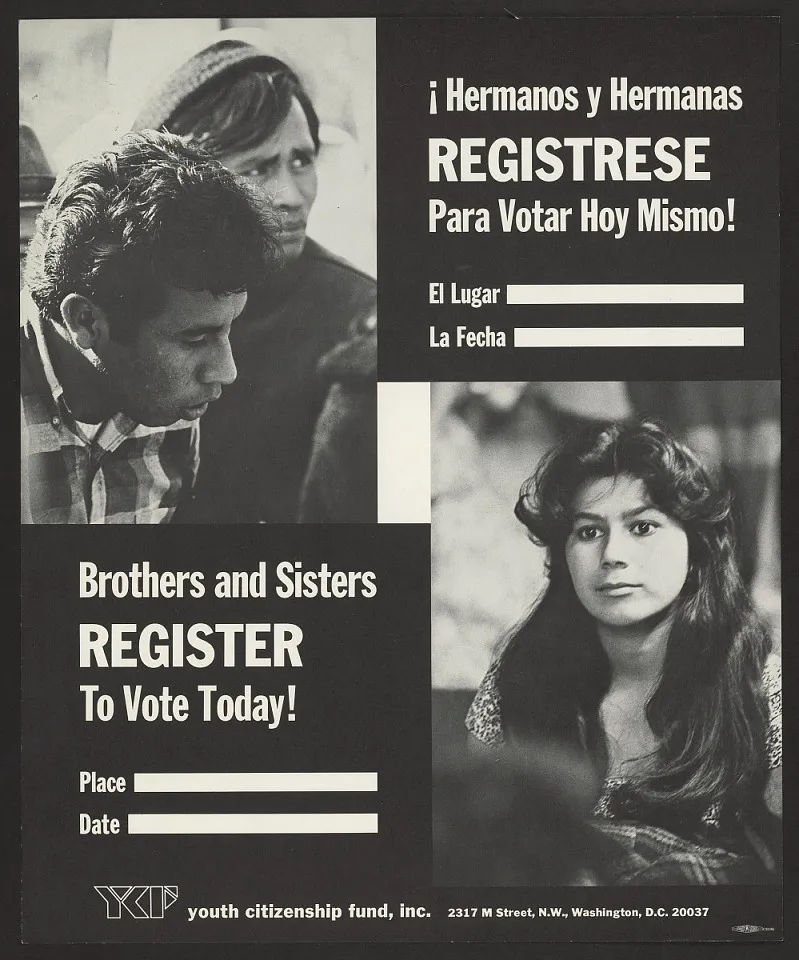
Photo: Youth Citizenship Fund, Public domain, via Wikimedia Commons
There is a particular kind of silence that precedes collapse. It is not the silence of contentment, nor of peace. It is the silence of a people who have stopped speaking because they no longer believe anyone is listening. That silence is now spreading across the United States — not as a whisper at the margins, but as a roar building in the hearts of millions of young Americans who have looked at the democratic process and concluded, with cold and studied clarity, that it is a theater performed for their benefit while decisions are made elsewhere.
This is the reckoning that no political consultant, no party chairman, and no incumbent senator wishes to confront honestly. It is far easier to blame social media algorithms, foreign interference, or the seductions of political extremism on both flanks. But the truth is more damning than any of those convenient explanations. Young Americans are abandoning faith in the democratic process not because they have been radicalized, but because they have been paying attention.
A Rational Desertion
Consider what the last two decades have delivered to citizens now aged eighteen to thirty-five. They entered civic consciousness during the financial crisis of 2008, watched the architects of that catastrophe receive taxpayer-funded bailouts while their parents lost homes and retirement savings, and then observed those same architects return to positions of influence within years. They were promised that their votes in 2008 and 2012 would produce fundamental change in how Washington operated. The machinery of government absorbed those mandates and continued turning as it always had.
They were told in 2016 and again in 2020 that each election represented the most consequential in American history — a framing that has been deployed so relentlessly it has become self-parody. And yet the national debt has continued its vertical ascent regardless of which party holds the White House. Federal spending has expanded under conservative and progressive administrations alike. The bureaucratic apparatus has grown. The promises made at election time have dissolved with remarkable consistency the moment governing begins.
To call this generation cynical is to misread them entirely. Cynicism implies a soured idealism, a bitterness that still carries within it the ghost of belief. What is spreading now is something colder and more dangerous: a reasoned conclusion that the mechanism itself is broken beyond the capacity of any election to repair.
The Debt as Testimony
Perhaps no single data point testifies more powerfully to this conclusion than the trajectory of the national debt. Young Americans did not create the $34 trillion obligation that now hangs over the republic. They did not vote for the successive rounds of spending that built it, did not benefit proportionally from the programs it funded, and will not be permitted to escape the consequences of it. They will spend their most productive working decades servicing obligations accumulated by politicians who have long since retired on generous federal pensions.
This is not an abstraction. It is the most concrete expression of what democratic participation has produced for their generation: a bill they did not run up, arriving at a table they were not seated at. When a young voter asks what their ballot accomplished, the fiscal record offers a brutal answer. Both parties have presided over this expansion. Both parties have returned to voters with fresh promises of discipline and restraint. Both parties have governed as though the ledger does not exist.
Is it irrational, then, for a generation to look at this pattern and conclude that the vote is a ritual rather than a lever? That the ceremony of democracy has been preserved while its substance has been quietly evacuated?
Beyond Left and Right
What makes this moment genuinely unprecedented — and genuinely alarming — is that the disillusionment has migrated beyond partisan grievance. Previous generations of young Americans who felt alienated from the process typically channeled that energy into insurgent political movements. They formed the base of campaigns that promised to disrupt the established order from within. The energy was frustrated, but it was still directed at the system as a reformable institution.
The emerging posture among a growing cohort of younger Americans is categorically different. It does not seek to reform the system through electoral means. It has concluded that electoral means are incapable of producing reform. This skepticism does not align neatly with left or right. It is shared, in different registers and with different vocabularies, by young progressives who believe corporate money has rendered elections meaningless and by young conservatives who believe a permanent administrative state operates immune to electoral outcomes. The diagnosis differs; the conclusion is identical.
That convergence should terrify every serious observer of American political life, regardless of their ideological commitments.
The Prophetic Warning in the Numbers
Turnout statistics tell part of the story, but they do not capture the full texture of the withdrawal. Surveys consistently show that trust in federal institutions among Americans under forty has fallen to historic lows. More troubling still are the qualitative findings: the growing percentage of young respondents who express not frustration with current leadership, but fundamental doubt about whether changing leadership would alter outcomes in any meaningful way.
This is the signature of a pre-collapse condition. Historians who study the dissolution of republics — ancient and modern alike — identify this precise psychological transition as among the most reliable precursors to systemic failure. When a citizenry stops believing that its participation is causally connected to outcomes, the social contract that sustains representative government dissolves at its roots. What remains is the architecture of democracy without its animating spirit.
A structure without a spirit does not stand indefinitely. It stands until a sufficient shock arrives — economic, military, social — and then it falls with a speed that surprises everyone who mistook the facade for the foundation.
The Judgment That Awaits Inaction
There are those in Washington and in the commentariat who will read this diagnosis and reach for reassuring counterarguments. Young people have always been skeptical of institutions, they will say. Civic engagement ebbs and flows. The republic has survived crises before.
All of that is technically true and entirely insufficient. The republic has survived crises before because it possessed reserves of institutional credibility that could be drawn upon in moments of stress. Those reserves are not infinite. They are depleted by every broken promise, every unpunished abuse of power, every election cycle in which the rhetoric of accountability gives way to the reality of continuity.
The generation now coming of age has watched those reserves drain in real time. They have grown up in the overdraft. And they are drawing the only logical conclusion available to rational observers of the evidence before them.
If there is a path back from this precipice, it does not run through better messaging or more sophisticated voter outreach campaigns. It runs through the painful and politically costly work of making government actually responsive to the people it claims to represent — beginning with the fiscal honesty that both parties have deferred for decades. Until that work begins in earnest, the hollow ballot will continue to empty, and the silence that precedes collapse will grow louder with each passing cycle.