The Permanent Governors: America's Unelected Ruling Class and the End of Consent
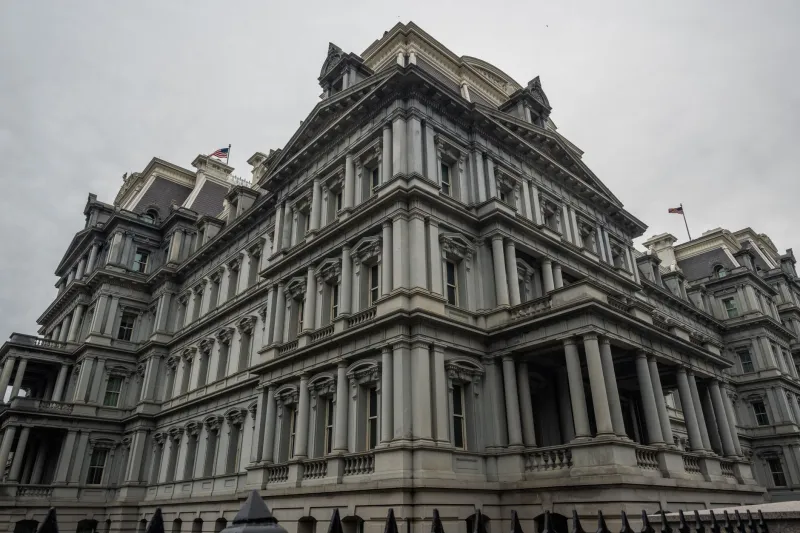
Every four years, Americans participate in an elaborate national ritual. Candidates make promises. Voters cast ballots. Winners are declared, inaugurations are held, and the machinery of democratic legitimacy completes its ceremonial rotation. And then, beneath the ceremony, nothing of fundamental consequence changes.
This is not cynicism. It is an observation that demands explanation.
Two Governments, One Country
The United States now operates, in practical terms, with two distinct governing structures. The first is the visible one — the elected Congress, the presidency, the state legislatures — whose activities are covered by cameras, debated in op-ed pages, and subjected to the verdict of voters at regular intervals. This government is real, but it is increasingly peripheral.
The second government is permanent. It consists of the vast federal administrative apparatus — an estimated two million civilian employees distributed across hundreds of agencies, departments, bureaus, and commissions — whose collective authority over American life dwarfs anything the elected branches exercise in practice. These are the officials who write the regulations that govern American business, interpret the statutes that elected legislators pass, determine the enforcement priorities that shape which laws are real and which are merely decorative, and control the flow of information upon which elected representatives depend to make decisions.
They are appointed, not elected. They serve indefinitely, not at the pleasure of the voters. And they have, over the course of the past century, accumulated a scope of authority that the Constitution's drafters would have recognized as precisely the tyranny they designed the document to prevent.
The Century-Long Accumulation
The growth of the administrative state was not a sudden usurpation. It was a gradual accretion, each expansion justified by crisis, each new agency presented as a temporary necessity that became a permanent feature. The Progressive Era launched the project. The New Deal accelerated it. The Great Society extended it. The regulatory expansions of the 1970s entrenched it. And the post-September 11 national security apparatus added layers of unaccountable power that dwarf anything that came before.
At each stage, the transfer of authority from elected representatives to appointed administrators was defended on grounds of expertise and efficiency. Democracy, it was argued, was too slow and too crude an instrument for the management of complex modern governance. Technical questions required technical answers, and technical answers required insulation from the messiness of electoral politics.
The argument was not without surface plausibility. It was also, in retrospect, a masterwork of institutional self-dealing. The class of administrators who benefited from expanded authority were the ones making the case for expanding it.
When Elected Officials Become Figureheads
The practical consequences of this century-long accumulation are now visible to anyone willing to look directly at them.
Presidents of both parties have entered office with clear policy mandates — explicit commitments made to voters on the basis of which elections were won — and found those mandates systematically obstructed, delayed, and ultimately neutralized by the permanent bureaucracy. This is not a partisan claim. It has been documented, complained about, and occasionally admitted by officials across the ideological spectrum.
Career officials slow-walk implementation of policies they oppose. Bureaucratic processes that could be completed in weeks extend across years. Interpretive discretion — the power to determine what a statute actually requires in practice — is exercised in ways that contradict the evident intent of elected legislators. Leaks to sympathetic press outlets are deployed as weapons against elected officials whose priorities conflict with those of the permanent staff.
The elected president nominates. The permanent government disposes.
The Regulatory State as Shadow Legislature
Perhaps the most consequential dimension of unelected power in America today is the regulatory function — the authority of administrative agencies to issue rules that carry the force of law without passing through Congress.
The volume of federal regulation now issued annually dwarfs the legislative output of Congress by orders of magnitude. For every statute passed by elected representatives, dozens — sometimes hundreds — of binding regulatory rules are issued by agencies whose leadership is appointed and whose staff is effectively permanent. These rules govern what American businesses may produce, what American workers may be paid, what American citizens may build on their own land, and what financial instruments American investors may purchase.
This is legislation. It simply does not carry that name, and it does not require the consent of the governed in any meaningful sense.
The courts have, historically, deferred to agency expertise in interpreting ambiguous statutory language — a doctrine known as Chevron deference that effectively granted administrative agencies the authority to define the limits of their own power. That doctrine has recently faced serious judicial challenge, but the regulatory infrastructure built upon decades of deference remains largely intact.
The Consent of the Governed: A Fading Principle
The Declaration of Independence identified the consent of the governed as the foundation of legitimate authority. That principle has been progressively evacuated from American governance as the administrative state has expanded. When the rules that govern daily life are written by officials no citizen voted for, interpreted by bureaucracies no citizen can remove, and enforced by agencies whose priorities no election can meaningfully alter, the phrase "consent of the governed" becomes a historical artifact rather than a living political reality.
Conservative legal scholars and political theorists have been raising this alarm for decades, often dismissed as ideologues hostile to effective governance. The dismissal was always more convenient than honest. The question of whether unelected officials should possess law-making authority is not a question of left or right. It is a question of whether the American republic means what its founding documents say it means.
The Reckoning That Cannot Be Administered Away
There is a judgment that accumulates, silently and without announcement, when a governing class separates itself entirely from the accountability of those it governs. History has recorded this judgment many times. It does not arrive on a schedule that bureaucracies can manage or that administrative procedures can forestall.
The American people retain, in theory, the authority to demand a genuine accounting — to insist upon a restoration of the principle that those who make the rules must answer to those who live under them. Whether that authority can be effectively exercised against a permanent governing class that has spent a century insulating itself from exactly such accountability is the defining political question of this era.
The answer will not be found in the next regulatory filing. It will be found, if it is found at all, in whether Americans still possess the civic conviction to demand that their government actually belong to them.