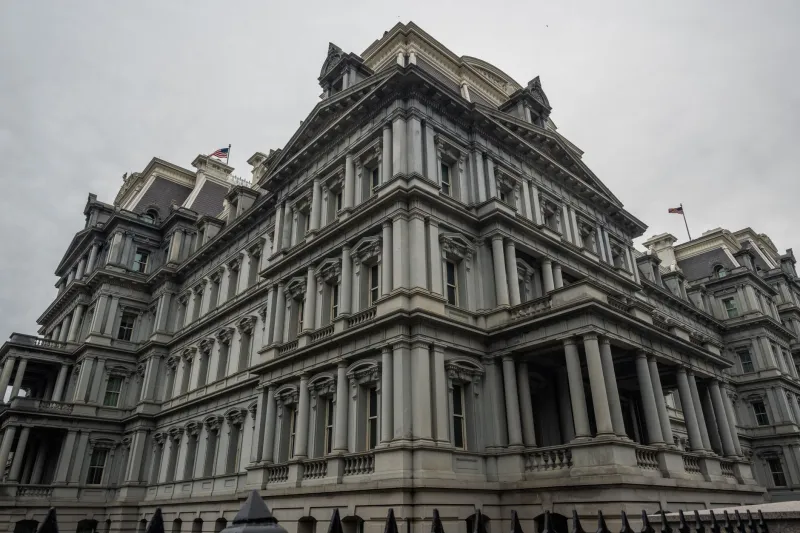
The Infected Bloodstream: Why America's Institutions Cannot Heal Themselves
Every civilization that has ever collapsed believed, until very near the end, that it possessed the internal resources to correct its course. Rome did not lack reformers. The reformers simply arrived too late, worked within structures too compromised, and trusted processes too captured to deliver any result other than further entrenchment of the very pathologies they sought to cure.
America is not Rome. But the pattern is disturbingly familiar.
The Architecture of Self-Correction, and Its Failure
The American constitutional order was constructed with a sophisticated understanding of human nature — specifically, the understanding that power concentrates, corrupts, and resists correction. The Founders built countervailing forces into the architecture of government: separation of powers, federalism, an independent judiciary, a free press. Each institution was designed not merely to perform its primary function but to serve as a check upon every other.
This was, in theory, a self-correcting system. When one branch overreached, the others would resist. When government exceeded its mandate, the press would expose it. When regulations were captured by the industries they governed, oversight bodies would intervene.
The theory was elegant. The practice, across the span of a century, has been catastrophic.
What the Founders could not fully anticipate was the capacity of determined interests to colonize the corrective mechanisms themselves — not by abolishing them, but by inhabiting them. The regulatory agency becomes the instrument of the regulated industry. The oversight committee becomes the protector of the overseen bureaucracy. The watchdog publication becomes the client of the institutional class it once scrutinized.
The Revolving Door as Structural Rot
No single phenomenon illustrates this collapse more vividly than the revolving door between government regulatory bodies and the private interests those bodies nominally govern. This is not a partisan observation. It is a structural reality that has persisted across administrations of both parties, accelerating with each decade.
Consider the trajectory of the modern regulatory apparatus. Officials who spend careers inside federal agencies depart, almost as a matter of professional custom, for senior positions within the very industries they once regulated. Their replacements arrive from those same industries, carrying with them relationships, assumptions, and loyalties formed outside the public interest. The agency, over time, ceases to function as a check upon concentrated private power. It becomes its instrument.
This process is not secret. It is not even particularly controversial in Washington's professional culture. It is simply how things are done. And that normalization is precisely the problem. When structural corruption becomes indistinguishable from institutional routine, the mechanisms designed to identify and correct corruption are themselves incapable of seeing it.
The Press: From Watchdog to Lapdog
The independent press was, in the Founders' conception, the last line of democratic defense — the institution that could expose what all other institutions conspired to conceal. The First Amendment's protection of press freedom was not a courtesy extended to journalists. It was a structural necessity, a recognition that self-governance required an adversarial information environment.
What America now possesses bears little resemblance to that conception.
The consolidation of American media into a small number of corporate entities, each with extensive financial relationships with the political and institutional class, has produced a press that is, in the most important functional sense, no longer independent. This is not a conspiracy. It is an economic logic. Publications that depend upon access to powerful institutions cannot afford to be genuinely adversarial to those institutions. Journalists whose careers depend upon relationships with official sources cannot afford to burn those sources by reporting what those sources prefer concealed.
The result is a media landscape that performs the theater of accountability while systematically avoiding its substance.
The Mathematical Impossibility of Incremental Reform
The conventional response to this diagnosis is a call for reform — more transparent lobbying rules, stronger ethics requirements, reinvigorated antitrust enforcement against media consolidation. These proposals are not without merit in isolation. But they share a fatal premise: that the institutions capable of implementing such reforms retain sufficient independence from the interests being reformed to do so effectively.
They do not.
This is the mathematical reality that polite political discourse declines to confront. Meaningful reform of captured institutions requires the existence of uncaptured institutions capable of forcing that reform. When the capture is sufficiently comprehensive — when the regulatory bodies, the oversight mechanisms, the press, and the political class are all participants in the same interlocking system of mutual benefit — there is no external lever available. The system cannot be reformed from within because "within" now encompasses everything.
The Reckoning That Incrementalism Cannot Prevent
This publication does not traffic in comfortable conclusions. The evidence assembled here does not support optimism about the efficacy of working within existing structures. It supports, instead, a clear-eyed confrontation with an uncomfortable truth: the current institutional order has passed the threshold of self-correction.
This does not mean that nothing can be done. It means that what can be done will not look like what has been tried. It will require a willingness to name the collapse honestly, to refuse the false comfort of incremental proposals offered by the very class that benefits from the present disorder, and to begin the serious work of imagining what accountable governance must look like after the current architecture finishes its long, grinding failure.
Judgment does not suspend itself while the patient insists he can heal on his own. It simply proceeds.