When Nothing Sticks: The Slow Death of Accountability in American Public Life

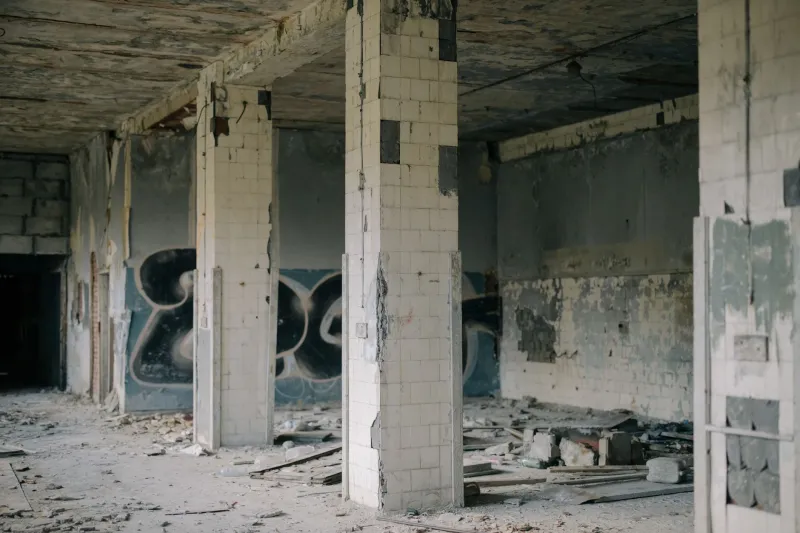
There is a particular kind of rot that does not announce itself with a crash. It settles in quietly, incrementally, the way a foundation erodes not from a single catastrophic flood but from years of slow water working its way through unseen cracks. The collapse of accountability in American governance is precisely that kind of rot — and by the time most citizens recognize the structural damage, the building may already be beyond saving.
We have arrived at a moment in this republic's history when the phrase "no one is above the law" functions less as a governing principle and more as a ceremonial incantation — repeated with great solemnity at press conferences and congressional hearings, then quietly shelved the moment its application might inconvenience the powerful. The consequences of this erosion are not merely political. They are civilizational.
The Scandal Treadmill and the Exhaustion of Outrage
Consider the psychological condition of the average American citizen who has followed public affairs attentively over the past two decades. He has witnessed financial institutions devastate the national economy and walk away with federal bailouts rather than federal indictments. He has watched senior intelligence officials lie to Congress without suffering so much as a professional reprimand. He has seen cabinet secretaries, congressional leaders, and agency directors implicated in misconduct that would end any private citizen's career — only to observe those same figures resurface months later on lucrative speaking circuits or cable news panels.
The cumulative effect of this parade of unaccountable transgression is not righteous anger. It is something far more dangerous: moral fatigue. When every scandal is superseded by the next before any resolution is reached, when investigations stretch across years only to conclude with no meaningful consequence, the citizenry does not become more vigilant. It becomes numb. And a numb citizenry is precisely what those who have escaped accountability require in order to continue escaping it.
This is not accidental. The sheer volume and velocity of institutional misconduct in modern American governance functions, whether by design or by convenient coincidence, as a kind of inoculation against sustained public fury. Outrage has a metabolic cost, and a population that has been asked to sustain it continuously — across administrations, across parties, across decades — eventually runs out of the energy required to demand justice.
The Structural Architecture of Impunity
Beyond the psychological, there is the structural. America's accountability mechanisms were designed for an era when the institutions enforcing them retained both independence and integrity. Federal prosecutors answerable to politically appointed attorneys general, congressional oversight committees staffed by members whose own conduct is equally suspect, inspectors general whose findings can be ignored or whose positions can be eliminated — these are not the instruments of genuine accountability. They are its theater.
The fiscal dimension of this crisis deserves particular scrutiny. When public officials face no meaningful consequences for mismanaging public funds — when Pentagon audits reveal trillions in unaccountable expenditures and the responsible parties face no sanction, when government agencies operate for decades without passing a basic financial audit — the message transmitted to every level of governance is unambiguous: the money is not yours to protect, and there will be no reckoning for wasting it.
This is not a partisan observation. The architecture of fiscal impunity has been constructed and maintained across Republican and Democratic administrations alike. It is a bipartisan achievement of the governing class — perhaps the only genuinely bipartisan achievement of the past generation. Both parties have contributed their share of bricks to the wall that separates the political class from the consequences of its financial decisions.
What Happens to a Society That Stops Expecting Justice
The ancient warning embedded in the name of this publication is not rhetorical decoration. Judgment, in both the theological and the historical sense, is not a force that requires human cooperation to arrive. Civilizations do not escape consequence simply because their citizens have grown too exhausted to demand it. History is a long ledger, and the entries accumulate whether or not anyone is watching the books.
What happens, practically, when a society exhausts its capacity for moral outrage? Several things, none of them encouraging. Trust in institutions collapses — not gradually, but in sudden lurches, as each new unaddressed scandal confirms what citizens had already begun to suspect. Political legitimacy erodes, and with it the voluntary compliance that makes governance possible without coercion. Citizens begin to calculate that the rules apply only to those without the resources or connections to evade them — a calculation that, once widely shared, corrodes the civic fabric from within.
Perhaps most dangerously, the vacuum left by collapsed institutional accountability does not remain empty. It fills. It fills with demagogues who promise the accountability the institutions have failed to deliver. It fills with cynicism that makes genuine reform nearly impossible, because a population that believes all politicians are equally corrupt will not reliably distinguish between the merely flawed and the genuinely dangerous. And it fills with the quiet, grinding resentment of citizens who understand, at some level, that they are being governed by people who do not believe the rules apply to them.
Recovering the Will to Demand More
The path forward is neither simple nor guaranteed. Restoring accountability to American governance requires, at minimum, a citizenry willing to sustain attention through the long, unglamorous work of demanding consequences rather than merely demanding headlines. It requires institutional reforms that insulate oversight mechanisms from the political pressures that have rendered so many of them toothless. It requires, frankly, a moral seriousness about public conduct that the current cultural moment does not readily supply.
None of this is beyond the capacity of a republic founded on the proposition that power derives from the consent of the governed and must therefore answer to those it governs. But it requires that citizens resist the temptation of cynical resignation — the comfortable conclusion that nothing can be done and no one can be held to account. That resignation is not wisdom. It is surrender.
The reckoning that accountability deferred eventually produces is never more merciful for having been postponed. Every generation of leaders that escapes the consequences of its failures simply transfers those consequences, compounded, to the generation that follows. The bill does not disappear. It grows. And a nation that has forgotten how to hold power accountable will find, in time, that power has forgotten its obligation to answer.
The judgment is not a threat. It is a law — as reliable as gravity, as indifferent to excuses as arithmetic. America would do well to remember that before it forgets entirely how to enforce accountability on its own terms, while it still retains the choice.